Every year, more than 3.7 million students in the U.S. learn from home—yet most families struggle to create a space that keeps kids focused, organized, and happy. A smart homeschool room setup can make learning smoother and reduce daily stress. But where do you start, and what really matters? This guide gives clear, practical ideas to build a space that works for your family, no matter your budget or square footage.
Essential Elements Of A Homeschool Room
A great homeschool room does not mean you need a large house or fancy supplies. The right setup uses space well and keeps everything simple. Here are the must-haves for any effective learning environment.
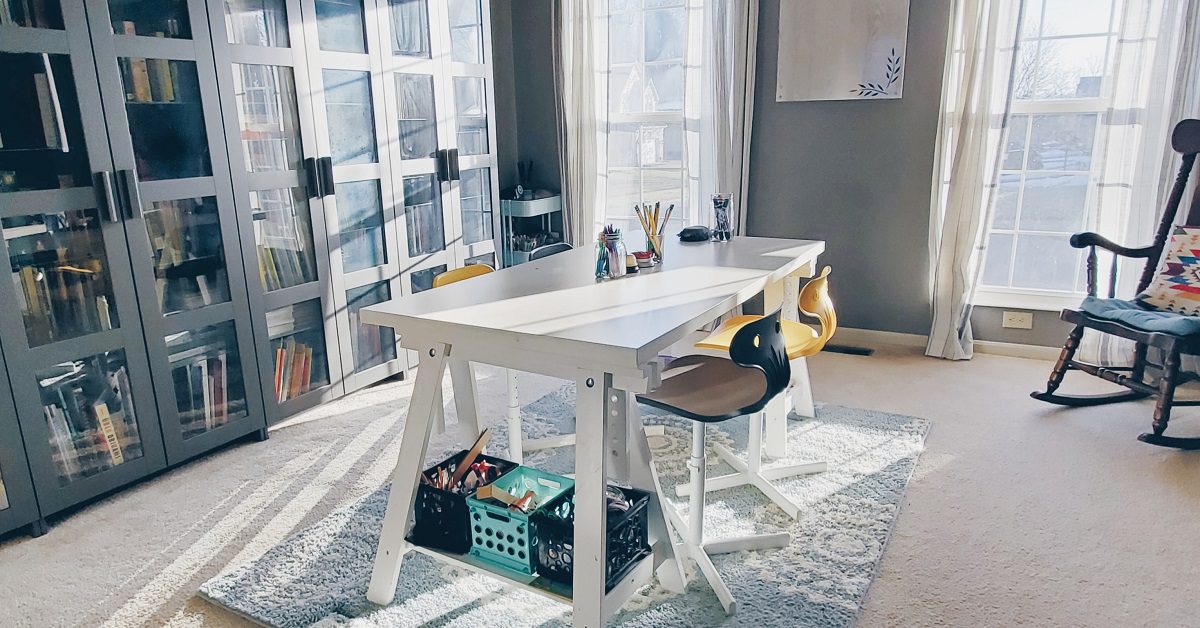
Dedicated Work Area
Every student needs a spot to focus. This could be a desk, a kitchen table, or even a portable tray. The key is consistency—use the same spot each day so your child’s brain links the space to learning.
Good Lighting
Poor lighting can make kids sleepy or strain their eyes. Try to use natural light near a window. If that’s not possible, a desk lamp with a soft white bulb works well.
Comfortable Seating
Choose a chair that supports good posture but is not too soft. For active kids, a wobble stool or exercise ball chair can help them stay alert.
Minimal Distractions
Keep toys, games, and screens out of sight during school time. Use baskets or bins to quickly tidy up before lessons start.
Accessible Supplies
Store pens, paper, and books within arm’s reach. This saves time and helps students stay in the learning flow.
Smart Organization Strategies
Homeschool rooms get messy fast. Simple organization makes it easy for everyone to find what they need and keep the room neat.
Use Color Coding
Assign each child or subject a color. For example, math bins are blue, reading folders are green. Kids can grab the right materials quickly.
Label Everything
Labels help younger children find things on their own. Use words, colors, or even pictures for non-readers.
Daily Materials Basket
Have a basket or tray for each day’s supplies. Pack it the night before so mornings start smoothly.
Paper Management
Too many papers cause stress. Use a file organizer or wall pocket for finished work, work to do, and parent papers.
Clear Out Weekly
Set a time each week to toss old papers, restock supplies, and put away clutter.
Budget-friendly Homeschool Room Ideas
You don’t need to spend much to build a good homeschool space. Here are some low-cost ways to set up your room.
- Repurpose Furniture: Use an old table or shelf instead of buying new.
- DIY Storage: Shoe boxes make great supply bins.
- Secondhand Finds: Check local groups for used desks and chairs.
- Simple Decor: Use your child’s artwork to brighten the room.
- Dollar Store Tools: Get baskets, pencil cups, and labels for cheap.
Organizing For Multiple Kids
If you teach more than one child, the room needs to work for everyone.
Shared Table Vs. Separate Desks
Some families use one big table. Others prefer desks for each child. The best option depends on your kids’ ages and learning styles.
| Setup | Pros | Cons |
|---|---|---|
| Shared Table | Encourages teamwork; easy to supervise | Can get noisy; less personal space |
| Separate Desks | Personalized area; fewer distractions | Takes more space; harder to supervise all at once |
Individual Supply Caddies
Give each child a caddy for personal items. This cuts down on arguments about supplies.
Schedule Quiet & Group Times
Plan the day so everyone knows when to work alone and when to join group lessons.
Storage Solutions That Work
Clutter kills focus. Good storage keeps supplies handy and makes cleanup fast.
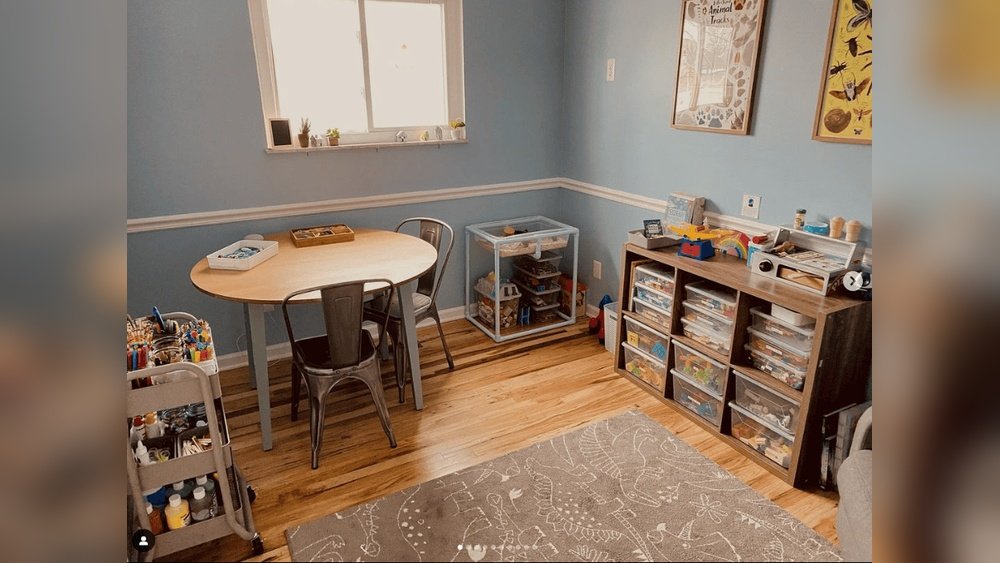
Rolling Carts
A rolling cart can hold books, art materials, or science kits. Move it around as needed.
Wall Storage
Use shelves, hooks, or hanging pockets to keep items off the floor.
Under-desk Bins
Slide bins under desks to hide extra supplies.
Binder Systems
Keep worksheets and completed assignments in labeled binders for each subject.
Vertical File Sorters
Stand-up file sorters save desk space and make it easy to grab the right folder.
Learning Zones For Every Subject
Different subjects may need different setups. Creating clear learning zones helps kids switch gears.
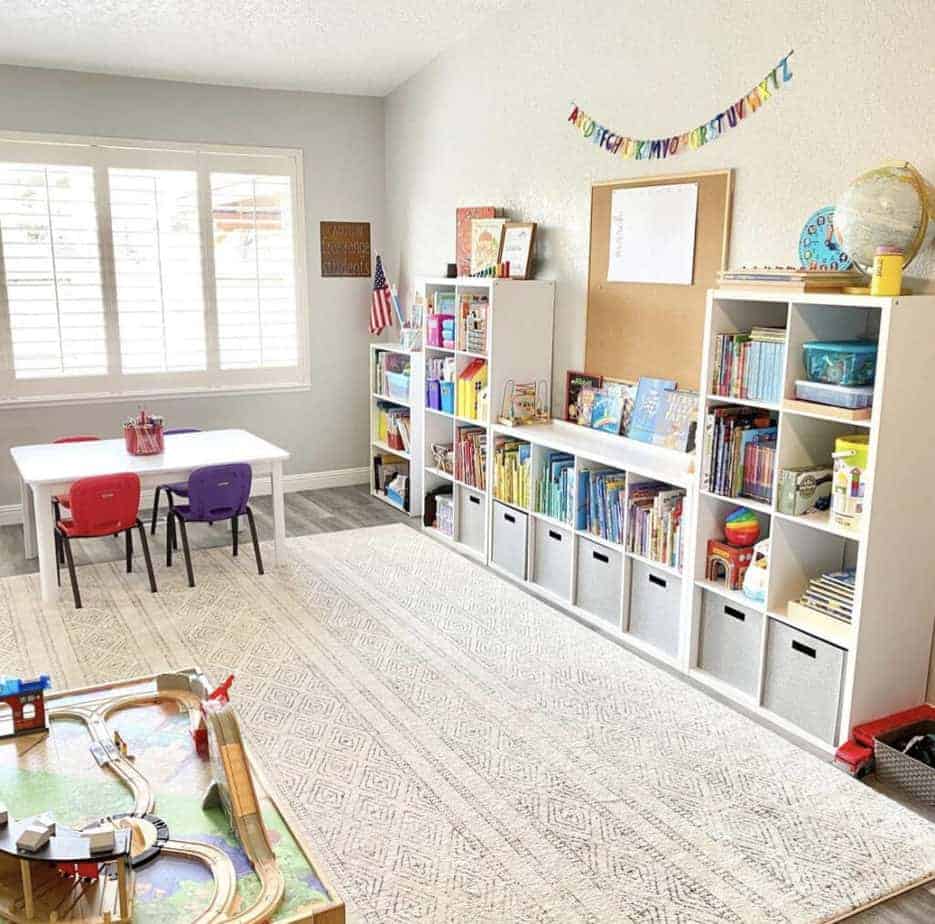
Reading Nook
Add a cozy chair, bean bag, or even a pile of cushions. Good lighting and a basket of books turn any corner into a reading spot.
Art Area
Cover a small table with a wipeable cloth. Store paints, markers, and paper nearby. Hang finished art on the wall for display.
Science Station
Keep a small shelf or bin for science kits and tools. A tray protects surfaces during messy experiments.
Tech Corner
If you use a computer or tablet, set up a “tech zone” away from distractions. Use headphones to keep noise down.
Time Management Tools
A well-organized room helps, but kids also need tools to manage their time and tasks.
Visual Schedules
Post a daily or weekly schedule on the wall. Use pictures or icons for young kids.
Timers
Kitchen timers or digital timers help with focus and breaks. Try the Pomodoro Technique—25 minutes of work, 5 minutes break.
Checklist Boards
Whiteboards or chalkboards let kids check off tasks as they finish. This builds independence.
Personalizing Your Homeschool Room
Personal touches make the space inviting and help kids feel ownership.
- Display student artwork or projects
- Hang a family calendar for special events
- Add a world map or inspirational quotes
- Let kids choose some decorations
Credit: thevanillatulip.com
Common Mistakes And How To Avoid Them
Many families make the same setup errors. Here’s how to sidestep them.
Overcrowding The Room
Too much furniture or decor distracts kids. Only keep what you use daily.
Ignoring Kid Input
Ask your child how they like to learn. They may prefer standing, moving, or sitting on the floor.
Forgetting Flexibility
Your needs will change over time. Choose furniture and storage that can adapt.
Skipping Routine Cleanup
Set a 5-minute timer at the end of each day for everyone to tidy up.
Quick-start Homeschool Room Setup (one-day Plan)
Pressed for time? You can set up a basic homeschool room in just one day.
- Pick your learning spot (table or desk)
- Gather basic supplies (paper, pencils, books)
- Set up a lamp and comfortable chair
- Make a “to-do” board or schedule
- Use boxes or baskets for quick storage
- Add a fun touch (artwork or favorite quote)
Do’s And Don’ts For Homeschool Room Setup
| Do | Don’t |
|---|---|
| Keep supplies within reach | Hide materials in hard-to-get places |
| Use natural light when possible | Rely only on dim lighting |
| Ask your child’s opinion | Ignore their learning style |
| Tidy up daily | Let clutter pile up |
Sample Budget For Homeschool Room Setup
A homeschool room can fit almost any budget. Here’s a simple cost breakdown for a basic setup.
| Item | Low Cost ($) | Mid Range ($) | Premium ($) |
|---|---|---|---|
| Desk/Table | 0-30 | 50-100 | 150+ |
| Chair | 0-20 | 40-60 | 100+ |
| Lighting | 5-15 | 20-40 | 60+ |
| Storage | 5-20 | 40-80 | 120+ |
| Supplies | 10-30 | 40-80 | 100+ |
Credit: classicalconversations.com
Resource Summary
For more ideas, check out the Homeschool.com Room Setup Guide. They offer real photos, supply lists, and creative tips from experienced families.
Frequently Asked Questions
How Much Space Do I Need For A Homeschool Room?
You do not need a whole room. A corner of a quiet room, a small table, or even a portable tray can work. The goal is a space that feels separate from play and rest.
What Are The Best Storage Options For Small Spaces?
Use wall shelves, under-table bins, rolling carts, and hanging pockets. Vertical storage saves floor space and keeps clutter off tables.
How Can I Keep My Homeschool Room Organized Every Day?
Set aside 5 minutes at the end of each day for everyone to help tidy up. Use labels and baskets so everything has a home.
How Do I Make The Space Fun And Motivating?
Add student artwork, bright colors, or a special reading nook. Let your child pick a few decorations or supplies.
What Is The Most Important Thing In A Homeschool Room?
Consistency and simplicity. A calm, organized space helps kids focus and enjoy learning—no matter how big or fancy the room.
Building the right homeschool room setup is not about perfection. It’s about creating a space where your family can learn, grow, and feel good every day. With a few smart choices and regular upkeep, your home can become the best classroom your child ever had.

Credit: musicalmemory.com