Active Recall Method — How to Use It for Better Grades
Did you know students using active recall can remember up to 50% more information compared to standard study methods? A 2013 study in the journal *Memory* found that retrieval practice (the core of active recall) boosts long-term memory far more than rereading or highlighting. If you want higher grades without extra study hours, learning how to use active recall can make a real difference.
What Is Active Recall?
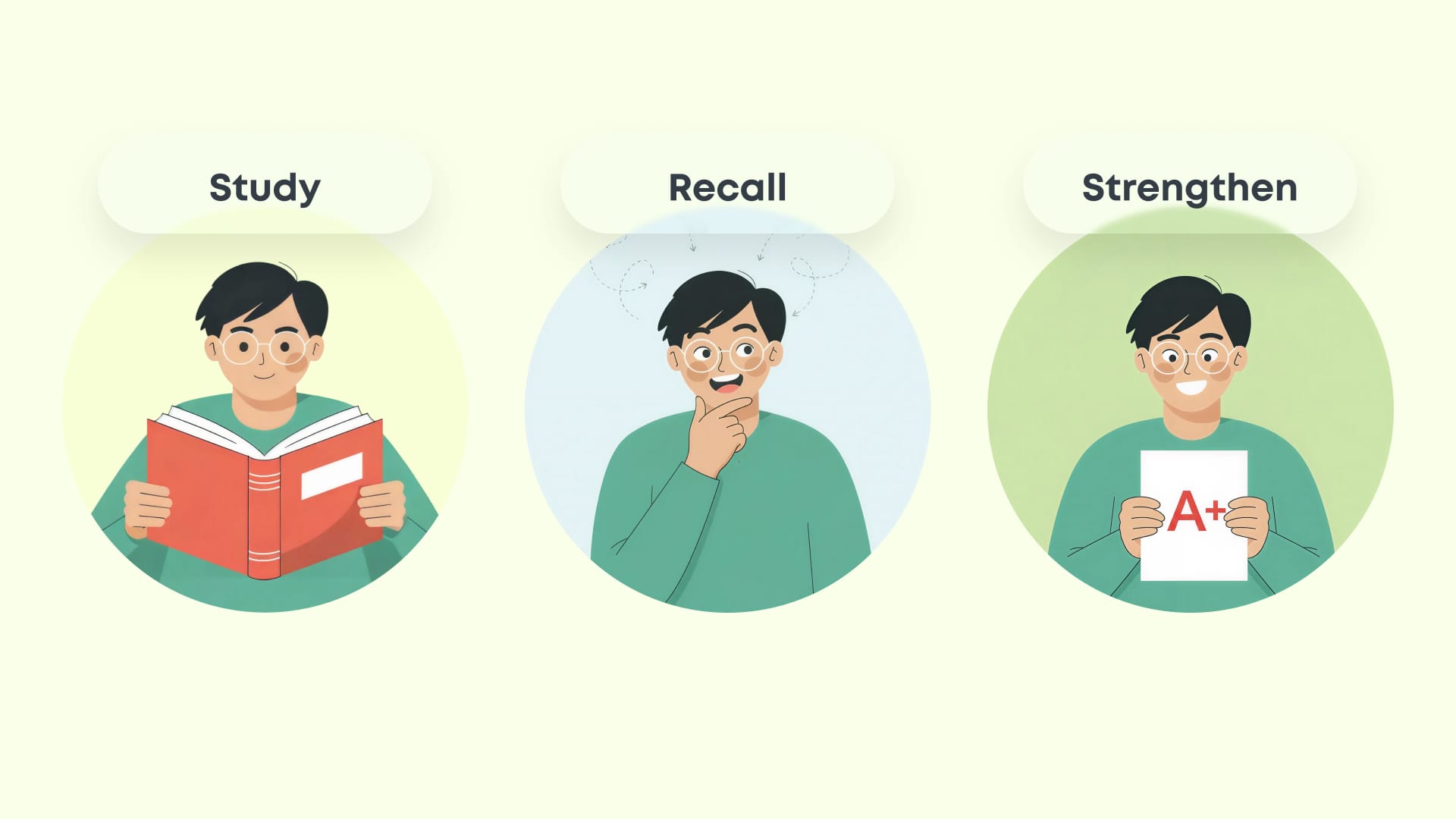
Active recall is a study technique where you actively test yourself on what you want to learn, rather than simply reading or reviewing notes. Imagine you close your textbook and try to write down everything you remember, or you answer practice questions from memory. This method forces your brain to retrieve information, making it “stick” better.
Think of your brain like a muscle. If you only watch someone lift weights, you won’t get stronger. But if you actually lift the weights yourself, your muscles grow. Active recall is like lifting weights for your mind.
How Active Recall Differs From Passive Review
Many students use passive review—reading notes, underlining, or listening to lectures repeatedly. While these feel productive, they don’t help your brain hold information for long. Active recall, by contrast, makes you work for the answer, which strengthens memory and understanding.
The Science Behind Active Recall
When you recall information, your brain forms new connections. Each time you practice retrieval, these connections get stronger. Studies show that students using active recall perform 10–20% better on exams compared to those using only passive review.
Stat: According to research, retrieval practice is “one of the most effective learning strategies.”
Why Active Recall Works: Key Benefits
- Boosts memory: Recalling facts or concepts helps move them from short-term to long-term memory.
- Improves understanding: You find gaps in your knowledge right away.
- Saves time: You focus on what you don’t know, making study sessions more efficient.
- Reduces exam stress: Practicing recall builds confidence for test day.
Real-world Example
Imagine you’re studying biology. Instead of reading your notes on cell division, close your notebook and list each step of mitosis from memory. Afterward, check what you missed. Over time, you’ll remember all the details with less effort.
Credit: www.brainscape.com
How To Use Active Recall: Step-by-step Guide
Anyone can use active recall with a few simple steps. Here’s how to get started and maximize results.
1. Choose Your Material Wisely
Pick a textbook chapter, lecture, or set of notes. Make sure you understand the basics before you begin.
2. Break Information Into Chunks
Divide topics into manageable sections. For example, study one chapter or 10 vocabulary words at a time. This keeps practice focused and less overwhelming.
3. Test Yourself Without Looking
After reviewing, cover your notes and try to recall everything you remember. Write it down or say it aloud. Use questions like:
- What are the main points?
- Can I explain this in my own words?
- What steps or stages are involved?
4. Use Flashcards Or Apps
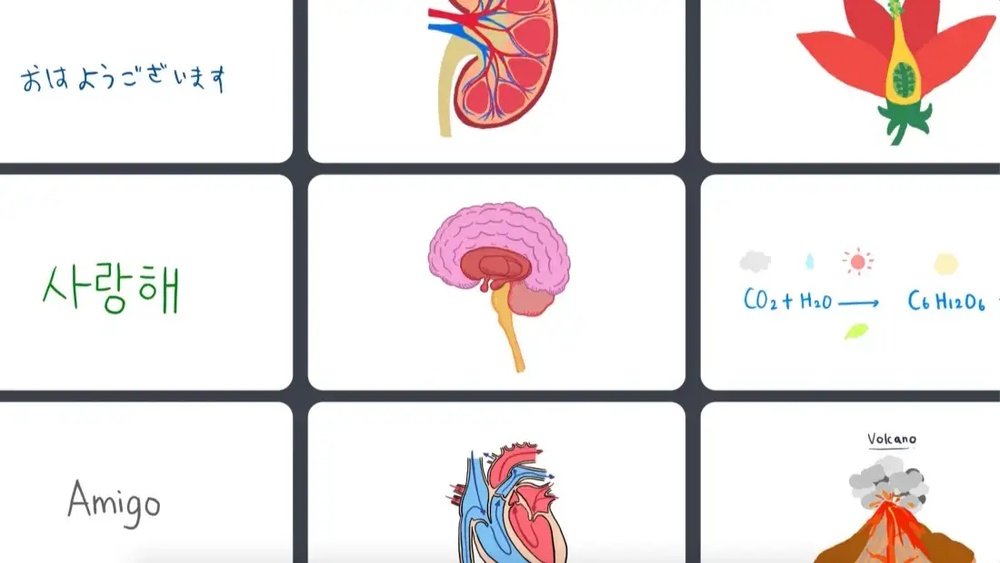
Write questions on one side of a flashcard, answers on the other. Test yourself regularly. Digital apps like Anki or Quizlet make it easy to review anywhere.
5. Check And Correct
After each recall attempt, check your answers. Review anything you missed or got wrong. Immediate feedback is key to improvement.
6. Repeat Over Time
Space out your active recall sessions. The more you practice, the better you remember. This is called spaced repetition—another science-backed technique.
Pro Tip: Combine active recall with spaced repetition for maximum results. Review material several times over days or weeks, not just the night before a test.
Named Techniques And Tools For Active Recall
Several proven methods help you use active recall more effectively:
Flashcards
Create flashcards for definitions, formulas, or key facts. Test yourself daily, shuffling the order to avoid memorizing by sequence.
Practice Testing
Find or create practice questions. Try to answer without looking at notes. Past exam papers are especially helpful.
The Feynman Technique
Explain a topic in simple language, as if teaching a child. If you get stuck, review the material and try again. This exposes weak spots in your understanding.
Brain Dumps
At the end of a study session, write down everything you remember about a topic—no peeking! Then compare with your notes.
Summary Sheets
After learning a topic, summarize the main points from memory. This method works well for subjects that require understanding, not just facts.
Common Mistakes Students Make
Even good students sometimes use active recall the wrong way. Here’s what to watch out for:
- Only reviewing flashcards without trying to recall first
- Checking answers too soon, before making a real effort
- Relying on passive review like rereading or highlighting
- Trying to remember too much at once (overloading your brain)
- Skipping review sessions (consistency is key)
Warning: If you only “recognize” answers instead of truly recalling them, you’re not getting the full benefit.
Examples: Active Recall In Different Subjects
Active recall is flexible. Here’s how it can work in various areas:
- Languages: Recall vocabulary or grammar rules by writing sentences from memory.
- Math: Solve problems without checking the solution steps.
- History: List key dates or events without looking at your notes.
- Sciences: Draw diagrams, label parts, or explain concepts in your own words.
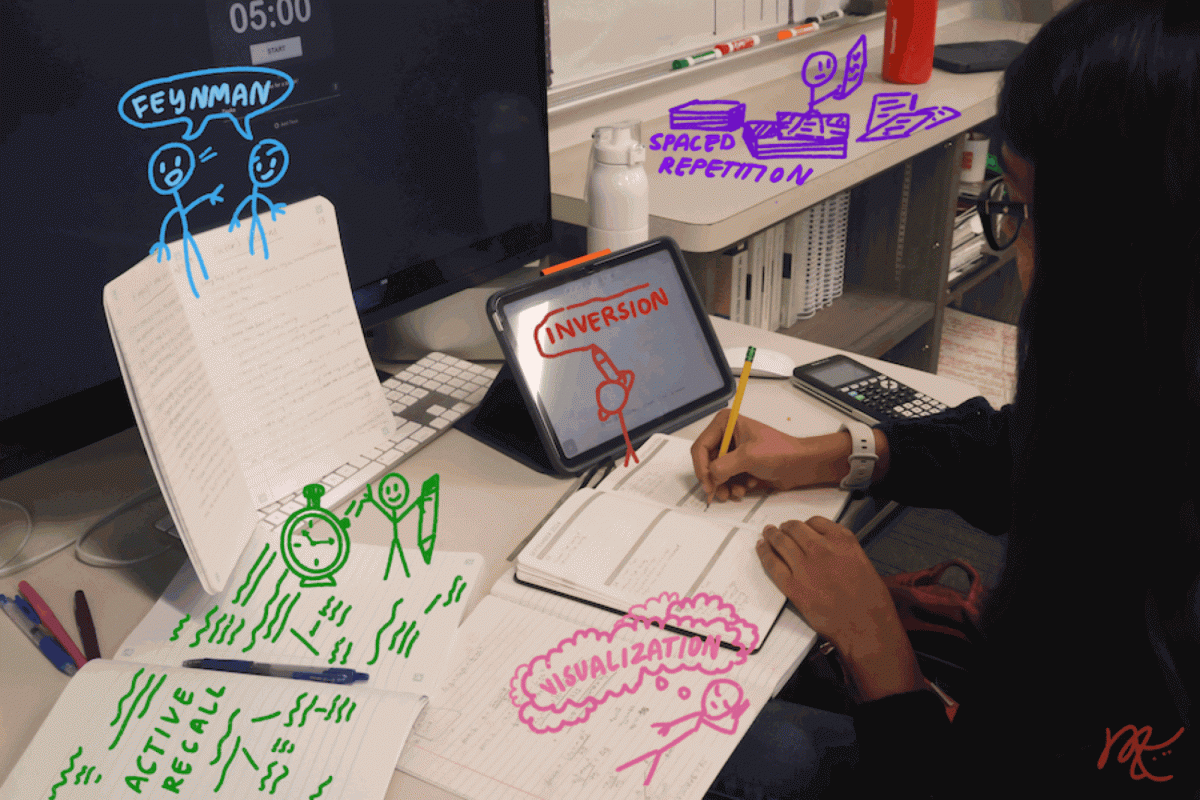
Credit: coppellstudentmedia.com
Quick Do’s And Don’ts Table
Here’s a simple guide to keep your active recall sessions on track:
| Do | Don’t |
|---|---|
| Test yourself without looking at notes | Just reread or highlight material |
| Use feedback to fill knowledge gaps | Ignore mistakes or skip corrections |
| Space out study sessions | Cram everything in one night |
| Break material into small chunks | Try to recall too much at once |
Myths Vs Facts About Active Recall
Let’s clear up some common misunderstandings:
| Myth | Fact |
|---|---|
| Active recall is only for memorizing facts | It also improves understanding and problem-solving |
| It takes more time than rereading | It saves time by focusing on what you don’t know |
| You need special tools or apps | Pen and paper work just as well |
| It’s only for certain subjects | It can be used for almost any topic |
Key Takeaways
- active Recall Means Testing Yourself, Not Just Reviewing Notes.
- it Strengthens Memory, Understanding, And Confidence.
- use Flashcards, Practice Questions, And Brain Dumps For Best Results.
- space Out Your Practice, And Always Check Your Answers.
- avoid Common Mistakes: Don’t Just Recognize, Actively Recall.
Frequently Asked Questions
What Is The Best Way To Start With Active Recall If I’m New To It?
Start small. Pick one topic or chapter. After reading, close your book and write down everything you remember. Check your notes and fill in gaps. Repeat this for other topics as you build confidence.
How Often Should I Use Active Recall For Each Subject?
Ideally, review each topic multiple times, spacing sessions over several days or weeks. For example, study today, then again in two days, then a week later. This is called spaced repetition, and it works well with active recall.
Can I Use Active Recall For Essay-based Subjects?
Yes! Try summarizing key arguments, writing essay outlines from memory, or practicing with old essay questions. The method helps you organize thoughts and remember facts for writing under exam conditions.
Do I Need Special Apps To Use Active Recall?
No. While apps like Anki and Quizlet can help, a notebook and pen work fine. The most important thing is to test yourself without looking at the answers first.
What If I Get Frustrated Because I Can’t Remember Much?
That’s normal at first. The struggle actually helps your brain learn. Each time you recall, even if you make mistakes, your memory gets stronger. Keep practicing and you’ll see progress.
Active recall isn’t just another study tip—it’s a proven way to learn faster and remember longer. With simple tools and the right approach, anyone can use it for better grades and greater confidence. Start small, stay consistent, and watch your results improve.

Credit: www.neurohackingly.com