
Interleaving Study Technique — What It Is And How It Works
If you study the same way most people do, you probably review one subject at a time, repeating it until you feel confident. But did you know that students who mix topics during practice can score up to 25% higher on tests? (Rohrer & Taylor, 2007). This powerful approach is called interleaving. It’s not just a study trick—science shows it helps you remember more for longer. Let’s explore what interleaving is, why it works, and how you can use it to learn smarter, not harder.
What Is Interleaving?
Interleaving means switching between different topics, skills, or types of problems while studying, instead of focusing on one at a time. For example, in math, instead of solving 20 algebra problems, you mix algebra, geometry, and statistics in the same session.
Think of learning like practicing sports. A basketball player doesn’t shoot 50 free throws, then 50 layups, then 50 three-pointers. They mix them up. This variety pushes your brain to choose the right strategy for each new problem. That’s exactly what interleaving does for your studies.
Mixing different types of problems or subjects forces your brain to “reset” and adapt, instead of staying in the comfort zone of repeating the same process. For example, if you’re learning a language, you might switch between reading, listening, and writing in one session instead of focusing only on vocabulary.
How Is Interleaving Different From Blocking?
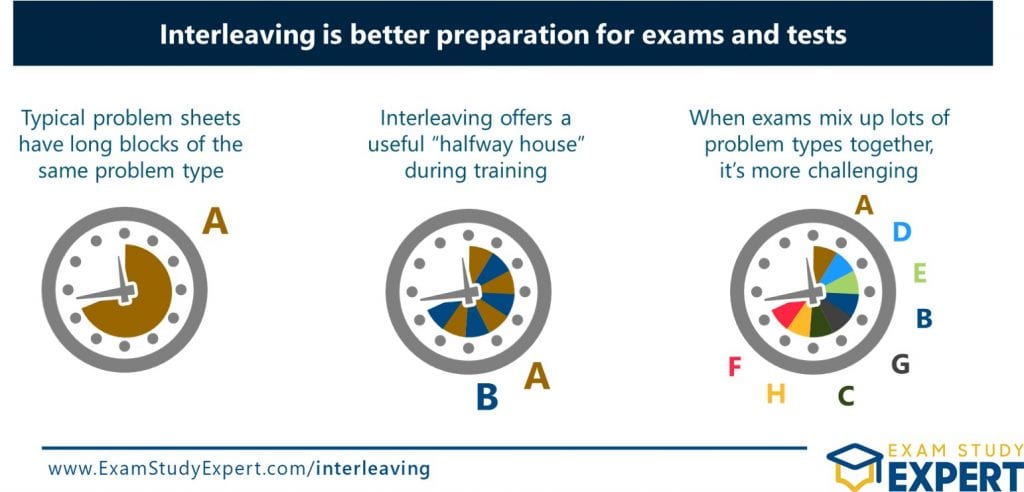
Most people use blocking: practicing one topic over and over before moving to the next. Blocking feels comfortable because you see quick progress, but it often creates a false sense of mastery. When you repeat the same type of question, your brain gets used to the pattern, but this doesn’t mean you truly understand the material.
With interleaving, each new problem or topic feels unfamiliar, making you think harder about which approach to use. This effort makes learning stickier. For instance, when practicing piano, playing the same song for 30 minutes (blocking) makes it seem like you’re improving fast.
But mixing songs, scales, and sight-reading (interleaving) actually prepares you better for real performances.
Why Does Interleaving Work?
Interleaving works because it:
- Makes your brain work harder to recall the right method
- Helps you spot differences and similarities between topics
- Builds flexible thinking for real-life test questions
Switching between topics means your brain can’t rely on habit. Instead, you have to remember the steps or rules for each type of problem. This process, called discriminative contrast, helps you spot subtle differences between similar problems. For example, in math, you learn when to use algebra and when to use geometry, instead of just repeating the same formula.
Studies show that interleaving improves long-term retention. In one study, students who used interleaving remembered 76% of concepts a month later. Those who blocked remembered only 42%. Interleaving also prepares you for tests where questions are not grouped by type, so you’re less likely to be surprised.
Another hidden benefit is that interleaving teaches you how to “find the right tool for the job. ” Real-life problems rarely come in neat categories. By mixing your practice, you learn to think flexibly and adapt, which is a key skill for advanced learning.
Stat: Interleaving boosts long-term learning by up to 50% compared to blocked study (Kornell & Bjork, 2008).
Key Benefits Of Interleaving
- Better test performance: You learn to pick the right solution for each question, even when topics are mixed, just like on real exams.
- Deeper understanding: You connect ideas across topics, so knowledge is less isolated and more flexible.
- More efficient practice: You spend less time but remember more, because you’re not just repeating what you already know.
- Reduces boredom: Mixing topics keeps your mind fresh and makes long study sessions less tiring.
Here’s another less obvious advantage: interleaving helps you avoid “illusion of competence.” This is when you feel you understand something just because you’ve practiced it a lot in a row. Interleaving reveals what you truly know, so you can focus your efforts where you need it most.
Many students also notice that after using interleaving for a few weeks, they’re less anxious before exams. They’ve practiced switching between topics, so they’re less likely to freeze when faced with a new type of question.
How To Use Interleaving In Your Study Routine
1. Mix Subjects Or Types Of Problems
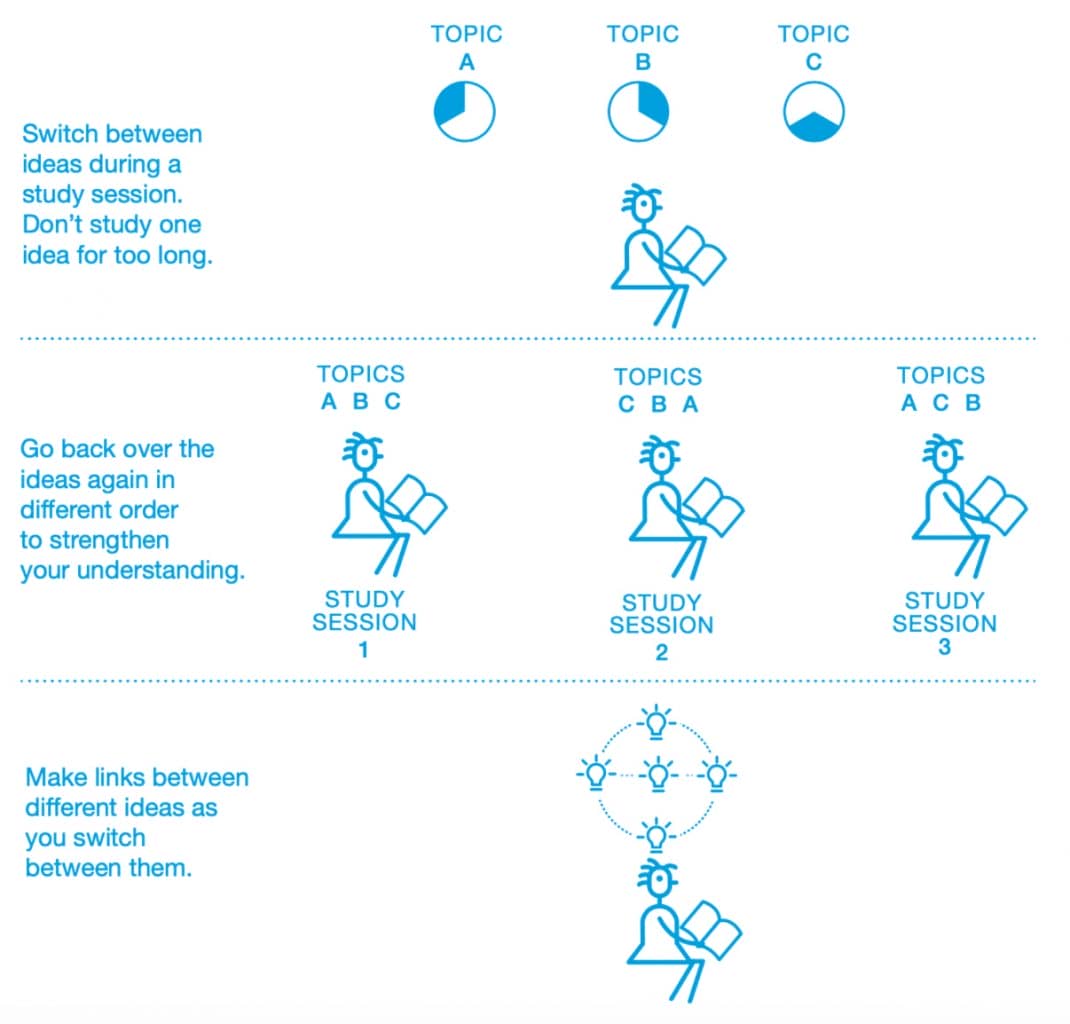
Don’t do all your history, then all your math. Instead, do some math, then some history, then science, then back to math. This keeps your brain alert and forces you to recall different information throughout your study time.
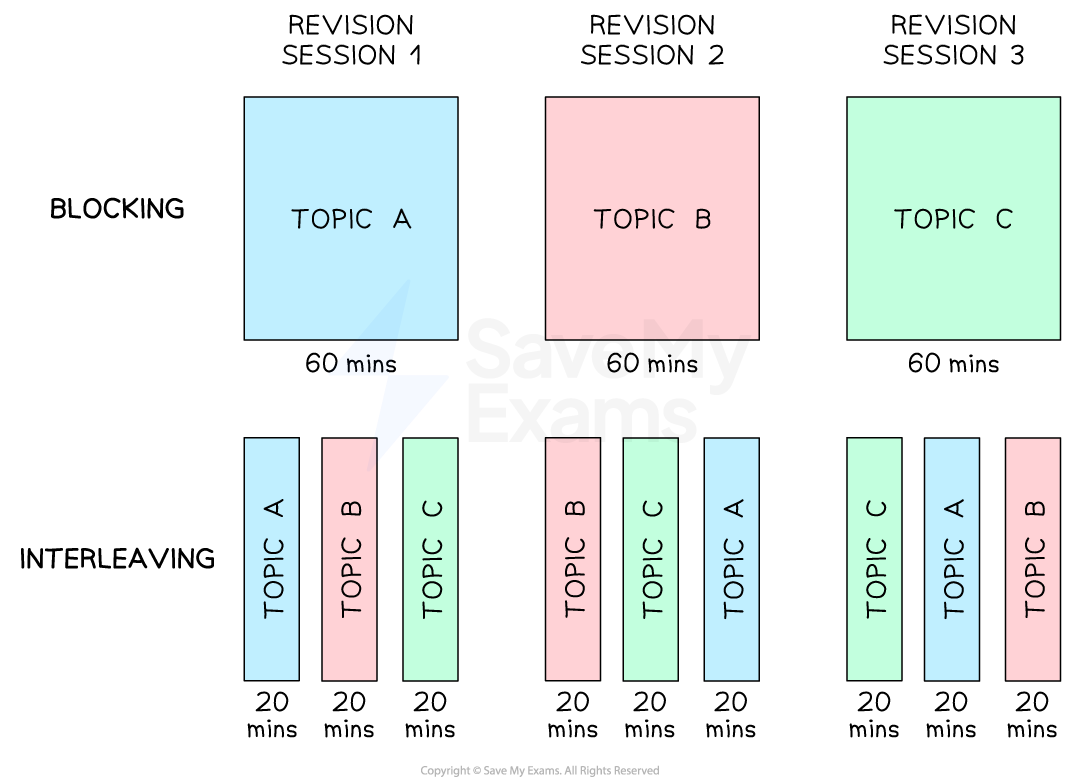
Example: One hour of study could look like:
- 20 min algebra problems
- 20 min biology reading
- 20 min history essay practice
You can also try mixing within one subject. For example, in science, combine physics calculations, chemistry questions, and biology diagrams.
2. Switch Between Similar Skills
If you’re learning math, mix different types of problems. For language, alternate between writing, reading, and listening. This way, you don’t get stuck in a single pattern.
Example: In math, solve a few equations, then some word problems, then graphing. In English, read a short article, summarize it in writing, then listen to a related podcast.
Mixing similar but not identical tasks makes your brain work to find the right solution each time, not just repeat steps by memory.
3. Plan Your Study Sessions
Use a calendar or checklist to schedule mixed-topic sessions. Don’t wait until you feel stuck. Plan the mix in advance. This helps avoid the temptation to do only what feels easy.
You might set up a weekly plan where every day includes at least two different subjects or types of problems. Over time, this becomes a habit and feels less confusing.
4. Review Old And New Material
Rotate older topics with new ones. This keeps everything fresh and helps with long-term recall. For example, if you learned geometry last month and statistics this week, mix both in your sessions.
A helpful tip: before starting new material, spend a few minutes reviewing a topic from last week. This builds strong memory links and prevents forgetting.
5. Practice Retrieval
After switching topics, pause and recall what you just learned. This reinforces memory and makes connections stronger. You can do this by closing your notes and trying to explain the concept in your own words.
Also, at the end of your session, quickly summarize key points from each topic you covered. This small habit strengthens your memory and helps you spot gaps in understanding.
Credit: examstudyexpert.com
Common Mistakes With Interleaving
Many students try interleaving, but make a few key mistakes. Watch out for these:
- Switching too often: If you switch every 2 minutes, you won’t go deep enough. Try 15–30 minutes per topic.
- Mixing unrelated subjects: Interleaving works best with related topics (e.g., different types of math), not completely separate ones.
- Giving up because it feels hard: Interleaving feels harder at first. That’s a sign it’s working.
- Not tracking progress: Without a plan, it’s easy to repeat the same topics and miss others.
Another common mistake is not reviewing previous material. If you always focus on new topics, you may forget older ones. Make sure your routine brings back old subjects regularly.
Tip: Write down which topics you practice each day to avoid repeating only your favorites.
Interleaving Vs. Other Study Methods
How does interleaving compare to other techniques, like blocking and spacing? Here’s a quick look:
| Technique | How It Works | Main Benefit | Main Challenge |
|---|---|---|---|
| Interleaving | Mix topics or problem types | Flexible thinking, better recall | Feels harder, requires planning |
| Blocking | One topic at a time in blocks | Quick confidence boost | Poor long-term retention |
| Spacing | Review topics over time with gaps | Stronger long-term memory | Needs regular review schedule |
It’s common to combine these methods. For example, you can interleave topics in a session and space your review across weeks. The main goal is to avoid doing everything in one big block.
Real-world Examples Of Interleaving
- Language Learning: Mix grammar, vocabulary, and speaking each session. One day, practice writing sentences using new vocabulary, then switch to listening exercises, then have a short conversation.
- Sports: A tennis player practices serves, volleys, and backhands in one session. This prepares them for the variety they’ll face in a match.
- Math: Alternate between algebra, geometry, and statistics problems. For example, after solving equations, move to geometry proofs, then return to algebra.
- Music: Practice scales, sight-reading, and a new song in the same session. This builds different skills and helps you adapt during performances.
In art, an artist might alternate between sketching, painting, and color mixing. This not only builds technical skill but helps with creative thinking.
Myths Vs. Facts About Interleaving
Many people believe some common myths about interleaving. Let’s set the record straight:
| Myth | Fact |
|---|---|
| Interleaving is only for math | Works for any subject with skills to mix |
| It’s less effective because it feels harder | Difficulty is a sign of deeper learning |
| You can mix any subjects | Best with related topics or similar skills |
| Blocking is just as good | Interleaving usually leads to better test scores and memory |
Another myth is that interleaving wastes time. In reality, you may spend less time overall, because you avoid re-learning forgotten material. Also, interleaving helps you discover your weak points early, not just before exams.
Do’s And Don’ts For Interleaving
Here’s a quick reference you can use when planning your study sessions:
| Do | Don’t |
|---|---|
| Mix problems from similar topics | Switch every few minutes or seconds |
| Plan your sessions in advance | Mix totally unrelated subjects |
| Give yourself time to adjust | Quit if it feels tough at first |
| Review your progress and adjust | Rely only on what feels easy |
Also, don’t forget to reflect after your sessions. Ask yourself: “Which topics were hardest to recall?” Use this feedback to fine-tune your next study plan.
How To Know If Interleaving Is Working
You’ll know interleaving is helping if:
- You can solve new types of problems on your own
- Test scores improve, especially on mixed-topic exams
- You remember material longer, even after a break
Try testing yourself with old exam papers that mix topics. If you’re getting more right, your study method is working. You might also notice you make fewer careless mistakes, because you’re used to switching between types of questions.
Another good sign: you start to notice patterns or connections between topics that you missed before. For example, you may realize how a formula in physics is similar to one in math.
Pro Tip: Ask a friend or teacher to quiz you on different topics in random order.
Credit: www.savemyexams.com
Key Takeaways
- Interleaving means mixing topics or problem types in your study sessions.
- It feels harder at first, but leads to stronger memory and better test scores.
- works Best With Related Topics And Regular Practice.
- Plan your sessions and track what you cover for best results.
Frequently Asked Questions
What Is The Best Way To Start Using Interleaving?
Start small. Pick two related subjects or types of problems and alternate them in your next study session. For example, if you’re studying math, do ten algebra problems, then ten geometry problems, then repeat. If you’re learning a language, mix reading and speaking tasks.
How Long Should I Spend On Each Topic Before Switching?
Aim for 15–30 minutes per topic. This gives your brain enough time to engage deeply, but not so long that you fall back into blocked practice. If you’re preparing for a big exam, try increasing the variety as the test date gets closer.
Does Interleaving Work For All Subjects?
It works best for subjects where you can mix similar skills or concepts—like math, science, languages, or music. For subjects that are only about memorization, spacing and retrieval practice may be more effective. Still, even in memorization-heavy subjects, you can mix question formats (e.
g. , fill-in-the-blank, multiple choice).
Why Does Interleaving Feel Harder Than Blocking?
Because your brain is working to choose the right method for each new question. This challenge builds stronger connections and helps you learn more deeply. Over time, what feels hard at first becomes your new normal, making exams less stressful.
Where Can I Find More Research On Interleaving?
A great place to start is the Wikipedia page on interleaved practice, which links to key studies and further reading.
Using interleaving might feel tough at first, but it’s one of the most effective ways to study smarter. Try it for a week, track your results, and you’ll likely never go back to your old ways.
Credit: www.magneticmemorymethod.com