
Music is more than entertainment—it’s a powerful tool for learning. Did you know a Stanford study found that music can actually help the brain organize incoming information, improving attention and memory? As students face endless distractions, finding ways to stay focused is more important than ever.
The right kind of music can turn a noisy room into a productive study zone and help students absorb more in less time. But how does music really help students focus better? Let’s break down the science, practical steps, and common mistakes so you can harness the power of music for your studies.
Why Music Impacts Student Focus
Music affects the brain in unique ways. When you listen to instrumental music or songs with a consistent beat, your brain releases dopamine—the “feel-good” chemical. This boost in mood can lower anxiety and make difficult tasks feel easier. But the effect of music goes deeper.
Scientific research shows that certain types of music can:
- Boost concentration: Background music helps block distracting noises.
- Improve memory: Melodies can trigger associations, making it easier to remember information.
- Increase motivation: Upbeat songs can energize you for long study sessions.
Here’s a quick look at the main benefits of study music:
| Benefit | How It Helps Students |
|---|---|
| Better Focus | Blocks distractions, keeps mind on task |
| Lower Stress | Soothes nerves, reduces anxiety before tests |
| Memory Boost | Links facts to tunes for easier recall |
Types Of Music That Work Best For Studying
Not all music helps you focus. The type of music you choose can make a big difference.
Classical Music
The “Mozart Effect” is famous for a reason. Classical pieces—especially those with steady tempos and no lyrics—help your mind settle into a rhythm for deep work.
Lo-fi Beats
Lo-fi music is popular on YouTube and Spotify. Its simple, repetitive beats create a calm background that reduces stress without distracting from your reading or writing.
Nature Sounds
Waves, rain, or forest sounds aren’t technically music, but they can still help focus. These sounds mask outside noise and create a peaceful study environment.
Instrumental Jazz
Smooth jazz, without lyrics, offers gentle melodies and rhythms. Many students find it helps them stay alert during long homework sessions.
Video Game Soundtracks
Game music is designed to keep players alert and focused. These tracks are energetic and engaging but rarely distracting.

Credit: whsjohnnygreen.org
Step-by-step: How To Use Music For Better Focus
Many students just press play and hope for the best. Instead, try this proven approach for real results:
- Pick the Right Playlist
- Choose music without lyrics. Lyrics can interfere with reading or writing.
- Try playlists labeled “study music,” “focus music,” or “concentration.”
- Set the Volume Low
- Keep your music in the background. Too loud, and it can distract instead of help.
- Match Music to the Task
- For reading or memorizing, use slow, calm music.
- For creative work, try upbeat or rhythmic tracks.
- Limit Session Length
- Study in 30–50 minute blocks. Take short breaks with or without music to reset your mind.
- Test and Adjust
- Everyone is different. Try different styles until you find what helps you most.
Example: Maria’s Study Routine
Maria, a university student, struggled to focus in her noisy dorm. She tried a “lo-fi beats” playlist at low volume while reviewing her notes. Within a week, she noticed she could finish her reading faster and remember details better. When she switched to pop music with lyrics, her grades dropped again.
Now, she sticks to instrumental playlists.
Tip: If you start singing along, your music is probably too distracting for studying!
What The Science Says
Research backs up the idea that music can improve focus. In a 2021 study, students who listened to classical music while studying scored 12% higher on memory tests compared to those who studied in silence. Another study found that background music helped 70% of students concentrate longer, especially in noisy environments.
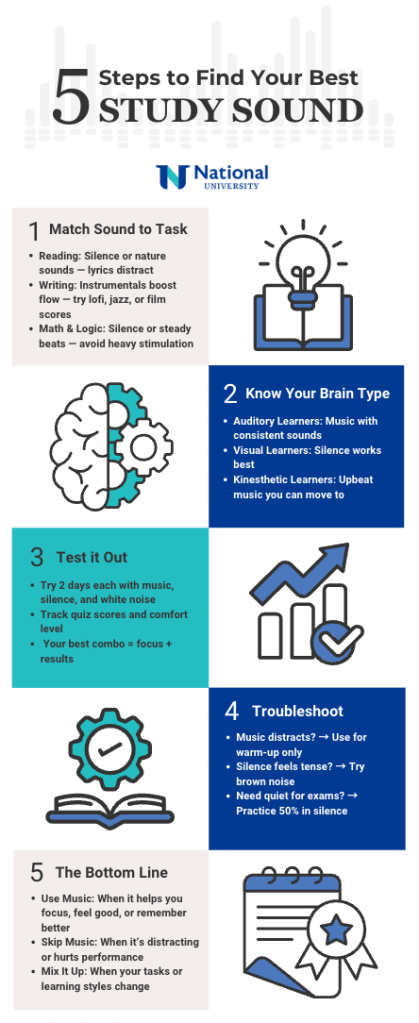
But the benefits depend on the type of music, personal preference, and the task. For example, math problems may need quieter, simpler music, while art or design work can handle a more upbeat soundtrack.
| Task | Best Music Type | Why It Works |
|---|---|---|
| Reading | Classical, Nature Sounds | No lyrics, steady rhythm aids focus |
| Writing | Lo-fi, Instrumental Jazz | Calm, energetic background supports creativity |
| Math/Problem Solving | Ambient, Minimalist | Simple, non-intrusive sounds reduce mental load |
Common Mistakes Students Make With Study Music
Even though music can help, some habits actually hurt focus. Watch out for these mistakes:
1. Choosing Music With Lyrics
Lyrics take up brain space—especially when reading or writing.
2. Playing Music Too Loudly
High volume can overstimulate the brain and make it hard to concentrate.
3. Switching Songs Too Often
Constantly changing tracks breaks your concentration.
4. Using Random Playlists
Not all playlists are made for studying. Choose ones made for focus.
5. Ignoring Your Own Preferences
Just because a study says classical is best doesn’t mean it works for you.
Insight: Some students focus better in silence, especially for heavy reading. Test both with and without music to discover what’s best for you.
Do’s And Don’ts Of Using Music For Focus
Here’s a simple guide to keep your study music on track:
| Do | Don’t |
|---|---|
| Pick instrumental playlists | Listen to loud, fast pop songs |
| Keep volume low | Blast music through speakers |
| Match music to task | Use the same playlist for everything |
| Take breaks from music | Study with music nonstop for hours |

Credit: berkeleyhighjacket.com
Two Insights Most Students Miss
- The “novelty effect” can wear off. If you listen to the same playlist every day, your brain may start to tune it out. Change playlists every week to keep the benefits fresh.
- Music can shape your study habits. If you always study with the same type of music, your brain starts to associate those sounds with deep focus. Over time, simply turning on your study playlist can help you enter “study mode” faster.
How To Build Your Own Study Music Routine
A personalized routine makes the biggest difference. Here’s how to build one:
- Make a few playlists: One for reading, one for creative work, and one for breaks.
- Use headphones: Noise-cancelling headphones are ideal, but any comfortable pair works.
- Experiment with timing: Try music for the first 20 minutes, then switch to silence, or vice versa.
- Stay flexible: If a playlist stops helping, change it up.
Credit: www.nu.edu
Real Data: How Many Students Use Music To Focus?
Surveys show that nearly 60% of college students listen to music while studying. Of those, about 75% report that it helps them focus or feel less stressed. Younger students, especially those in high school and university, are most likely to use music while doing homework or projects.
For an in-depth look at how music impacts the brain, see this study from NIH.
When Music Isn’t Helpful
It’s important to know when music might not help:
- Heavy reading: If you’re studying complex material, silence may be best.
- Group work: Music with headphones can isolate you from your team.
- Learning a new language: Lyrics in any language can slow your progress.
If you feel distracted, it’s okay to take the headphones off.
Frequently Asked Questions
Is It Better To Study With Music Or In Silence?
Some tasks are better with music, while others need silence. Try both and see which helps you focus more. For reading or memorizing, instrumental music or silence usually works best.
What Type Of Music Should I Avoid When Studying?
Avoid music with lyrics, fast beats, or sudden changes in volume. Pop, rock, and rap can be distracting for most study tasks.
How Loud Should I Play My Study Music?
Keep your music at a low volume—just loud enough to block out background noise, but not so loud that it takes over your thoughts.
Can Music Help Students With Adhd Focus?
Yes, many students with ADHD find that steady, non-lyrical music helps them block distractions and stay on task. However, everyone’s brain is different—experiment to find what works for you.
Where Can I Find Good Study Music Playlists?
Look for playlists labeled “focus,” “study beats,” or “instrumental” on streaming platforms like Spotify, YouTube, or Apple Music. Many students also enjoy lo-fi channels and classical music playlists.
Music isn’t a magic fix, but it can make studying less stressful and more productive. With a little trial and error, you’ll find the right sounds to help you focus better, remember more, and get more done. Let your study playlist be your secret weapon for success.