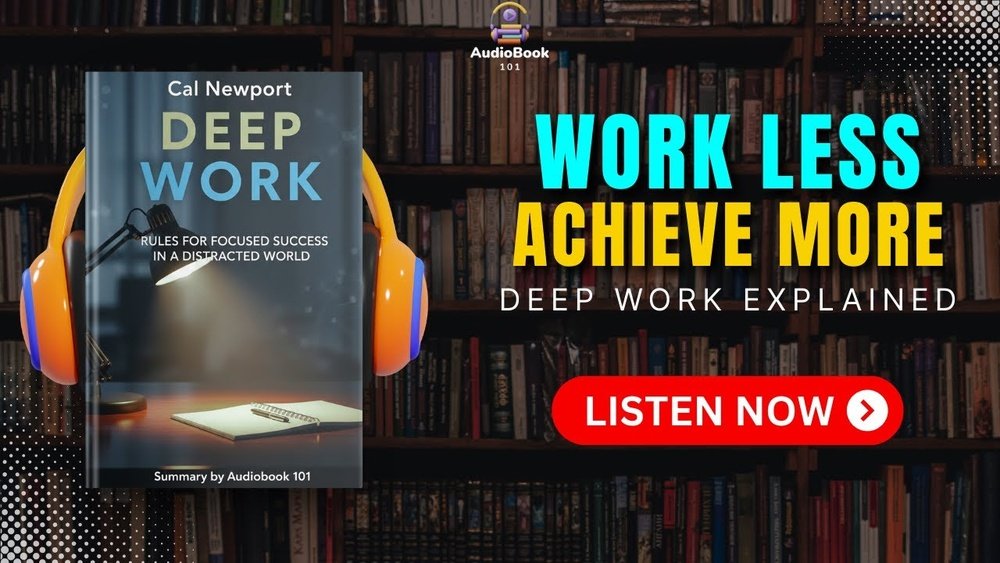
Did you know? According to a study by RescueTime, the average worker spends less than three minutes on a task before switching. In a world full of distractions, focusing deeply is rare—but it’s also powerful. Cal Newport’s book, Deep Work, offers a practical guide to mastering focus, and the audiobook version has made these ideas more accessible than ever.
What Is Deep Work?
Deep Work is a term created by Cal Newport to describe activities performed in a state of total concentration. These activities push your abilities and create real value. Unlike shallow work—like emails or meetings—deep work leads to breakthroughs and progress. Newport argues that deep work is becoming more rare and more valuable in today’s distracted world.
The audiobook brings these ideas to life through clear narration and practical stories. Newport shares how top professionals, from authors to tech experts, use deep work to achieve more in less time. The book isn’t just theory—it’s packed with strategies for anyone who wants to improve their focus and results.
Get 1 Free Audiobook To Keep
Start a 30-day free trial and pick any title from 700,000+ audiobooks. Your first book is yours forever, even if you cancel immediately.
Why Deep Work Matters Today
The digital age is full of distractions: social media, emails, constant notifications. Most people struggle to focus for more than a few minutes. Yet, Newport’s research shows that deep work is the skill that sets high achievers apart.
A 2018 study from the University of California found that office workers are interrupted every 11 minutes, and it takes an average of 23 minutes to get back on track. This constant switching lowers productivity and makes it hard to produce quality work.
Deep work, on the other hand, allows you to:
- Produce higher quality results
- Learn skills faster
- Stand out in your field
Newport’s audiobook explains why deep work is like a superpower. Those who master it can achieve more, learn quicker, and enjoy greater satisfaction from their work.
Key Concepts Explained
The Deep Work Hypothesis
Newport’s main argument: The ability to perform deep work is becoming rare and valuable. Those who develop this skill will thrive.
Shallow Work vs. Deep Work
- Deep Work: Focused, undistracted tasks that create real value.
- Shallow Work: Busywork, emails, meetings, and tasks that don’t require much concentration.
The Four Rules of Deep Work
1. Work Deeply
Build rituals, routines, and environments that make deep work possible. This could mean blocking time, turning off devices, or setting up a quiet workspace.
2. Embrace Boredom
Train your mind to handle boredom and avoid the urge to switch tasks or check your phone.
3. Quit Social Media
Be selective with online tools. Only use platforms that add real value.
4. Drain the Shallows
Cut down on shallow tasks. Schedule them so they don’t take over your day.
The audiobook describes each rule with examples, stories, and step-by-step advice.
Real-world Examples
- Adam Grant, a top professor, writes in distraction-free blocks and produces more research than peers.
- Bill Gates created “Think Weeks,” spending time alone to focus on new ideas.
- Writers, programmers, and CEOs use similar methods to stay ahead.
Deep Work Audiobook: Unique Features
- Narration by Jeff Bottoms is clear and engaging, making complex ideas easy to follow.
- Each chapter is separated with short summaries and practical takeaways.
- The listening format allows multitasking—commutes, chores, or exercise.
- The pacing is steady, with pauses for reflection.
Listeners report that the audiobook feels motivating and practical, not academic or dry.
Deep Work Strategies in Action
1. Time Blocking
Set aside blocks of time—one to four hours—for deep work. Protect this time from interruptions.
2. Rituals and Routines
- Starting at the same time each day
- Using a specific location
- Preparing a cup of coffee
- Turning off your phone
3. Tracking Progress
Keep a visible record of your deep work hours. Newport uses a simple wall calendar to mark days where he reached his goal.
4. Limiting Distractions
Use tools like website blockers or “do not disturb” modes. Tell colleagues you are unavailable during deep work blocks.
5. Embracing Boredom
Practice staying focused even when tasks are boring. This builds mental muscle.
Comparison: Deep Work vs. Other Productivity Books
| Book | Main Focus | Unique Feature | Best For |
|---|---|---|---|
| Deep Work | Focus, concentration | Actionable routines | Students, professionals |
| Atomic Habits | Habit formation | Easy steps, science-backed | Anyone building habits |
| The Power of Habit | Understanding habits | Story-driven | General audience |
| Getting Things Done | Task management | Workflow systems | Business, busy professionals |
Pros and Cons of the Deep Work Audiobook
| Pros | Cons |
|---|---|
| Easy to listen anywhere | May miss details if multitasking |
| Motivating narration | No visual summaries |
| Practical examples | Longer chapters can be hard to digest |
| Clear structure and pacing | Not interactive |
How to Apply Deep Work After Listening
- Identify your deep tasks — List the work or study tasks that require the most focus and create the most value.
- Schedule deep work sessions — Block at least one session per day. Protect it from interruptions.
- Set up your environment — Choose a quiet place, remove distractions, prepare everything before starting.
- Track your progress — Keep a journal or wall calendar.
- Review and adjust — After a week, review your schedule and environment.
Frequently Asked Questions
What is the main message of Deep Work?
The main message is that focused work is more valuable than ever. The ability to work deeply leads to better results, faster learning, and greater satisfaction.
Who should listen to the Deep Work audiobook?
Anyone who wants to improve their focus, productivity, or creativity. Students, professionals, and creatives will benefit most from Newport’s practical strategies.
How long is the Deep Work audiobook?
The audiobook is about 7 hours long. Most listeners finish it in a week by listening for one hour per day.
Can I use Deep Work strategies if I have a busy schedule?
Yes. Newport suggests starting with small blocks of deep work—30 minutes per day—and building up over time.
Final Thoughts
Cal Newport’s Deep Work audiobook is more than a guide—it’s a call to action. In a distracted world, the ability to focus deeply is your greatest asset. The book delivers practical advice, real stories, and clear steps. If you want to achieve more, learn faster, and feel more satisfied with your work, this audiobook is a smart starting point.
The key is not just to listen, but to apply what you learn. Set aside deep work sessions, track your progress, and embrace boredom. With Newport’s strategies, you can unlock your true potential.