How to Teach a Child to Read at Home — Step by Step
Did you know that over 80% of brain growth happens before age 5? Early reading at home is one of the most powerful ways to boost your child’s language, confidence, and future school success. But for many parents, teaching reading feels complex or stressful. The truth: you don’t need a teaching degree or expensive programs. With the right approach, you can guide your child to become a happy, skilled reader—right in your living room.
Get 1 Free Audiobook To Keep
Start a 30-day free trial and pick any title from 700,000+ audiobooks. Your first book is yours forever, even if you cancel immediately.
Understand How Reading Skills Develop
Before you start, it’s important to know the five core skills of reading. Most children need support in all these areas for strong literacy:
- Phonemic awareness (hearing and using sounds)
- Phonics (connecting sounds to letters)
- Vocabulary (knowing word meanings)
- Fluency (reading smoothly)
- Comprehension (understanding what’s read)
Children learn these skills step by step, not all at once. Skipping one stage often leads to frustration. For example, pushing books before your child knows letter sounds can make them dislike reading.
Stat: Children read better when families practice just 15 minutes a day—no matter their background or income.
Step 1: Build A Print-rich Home Environment
Show books everywhere. Fill your child’s space with storybooks, magazines, and labels on everyday objects like “door” or “fridge.” This helps them see that reading is part of daily life—not just homework.
Model reading yourself. Let your child see you reading for fun, too. Children copy what they see.
Talk about print—point out words on signs, food boxes, or apps. Ask, “What letter does this start with?” or “Which word is the biggest?”
Pro Tip
Rotate books weekly to keep things fresh. Even a small shelf with 8–10 books is enough.
Step 2: Teach Letter Names And Sounds
Children need to recognize both letter names (A, B, C) and their sounds (/a/, /b/, /k/). Start with letters in your child’s name, or common words they see daily.
- Sing the ABC song together
- Use magnetic letters on the fridge
- Trace letters in sand, rice, or shaving cream for sensory learning
- Play “I spy with my little eye, something that starts with /m/”
Common Mistake
Focusing only on letter names, not their sounds. It’s the sounds that help children read new words.
Step 3: Phonemic Awareness—play With Sounds
Phonemic awareness means hearing and playing with individual sounds in words. It is the foundation for reading. You don’t need special tools for this—just your voice.
- Clap out syllables (“el-e-phant” = 3 claps)
- Rhyme time: “What rhymes with cat?”
- Sound swap: “Say ‘mat’ but change /m/ to /s/”
- Blend sounds: “What word is /c/ /a/ /t/?”
Tip: Practice phonemic games in the car, at the table, or while walking. No pencil needed!
Step 4: Blend Sounds And Build Simple Words
Once your child hears sounds, help them blend them together. Start with two-letter combinations, then move to three-letter words.
- Use letter tiles to spell “at,” then add “c” for “cat,” “h” for “hat,” etc.
- Stretch words out slowly (“ssssssun”), then say them fast
- Let your child move letters as they blend: S-a-t → sat
Real Example
If your child knows “m,” “a,” and “t,” they can read “mat,” “tam,” and “amt. ” Practice mixing letters for more fun.
Step 5: Introduce Simple, Decodable Books
When your child can sound out words, start with decodable books—stories using only simple words and sounds they know. Avoid books with too many “tricky” words at this stage.
- Look for books with repetitive phrases (“I see a cat. I see a dog.”)
- Only 1–2 new words per page at first
- Let your child point as they read
Table: Decodable Book Vs. Storybook
| Type | What’s Inside | Best For |
|---|---|---|
| Decodable Book | Simple words, repeated sounds Few new words Short sentences |
Beginners learning to read |
| Storybook | Richer vocabulary Complex sentences Many new words |
Listening, vocabulary, fun |
Don’t rush—reading the same easy book many times builds confidence.

Credit: biglifejournal.com
Step 6: Build Vocabulary And Meaning
Reading is more than saying words. Children need to understand and talk about what they read.
- Pause to ask, “What do you think happens next?”
- Explain new words by linking to real life (“This is a ‘gigantic’ truck, like the one we saw yesterday.”)
- Act out stories or draw pictures of favorite parts
Pro Tip
Use non-fiction books (about animals, weather, trucks) to build vocabulary. Many children love facts as much as stories.
Step 7: Practice Reading Fluency
Fluency means reading smoothly, not word by word. This comes from practice and hearing language.
- Read aloud together (“echo reading”): You read a sentence; your child repeats it.
- Use poems or songs with rhythm and rhyme
- Set a timer for 1 minute: How many words can your child read? Make it a game, not a test.
Mistake To Avoid
Correcting every small error. Focus on smooth reading, not perfection.
Step 8: Support Comprehension Skills
Ask questions before, during, and after reading:
- “What do you think this story is about?”
- “Why did the dog run away?”
- “How did the story end?”
Encourage your child to make predictions and connect stories to their own life. This makes reading meaningful.
Step 9: Make Reading A Daily Habit
Set a regular reading time—bedtime, after school, or during breakfast. Just 10–15 minutes daily builds skills and bonds.
- Keep books in every room, even the car
- Celebrate progress: “You read 10 pages today!”
- Join your local library for fresh books and reading events
Stat: Children who read at home daily score higher in school, even more than kids in expensive tutoring.
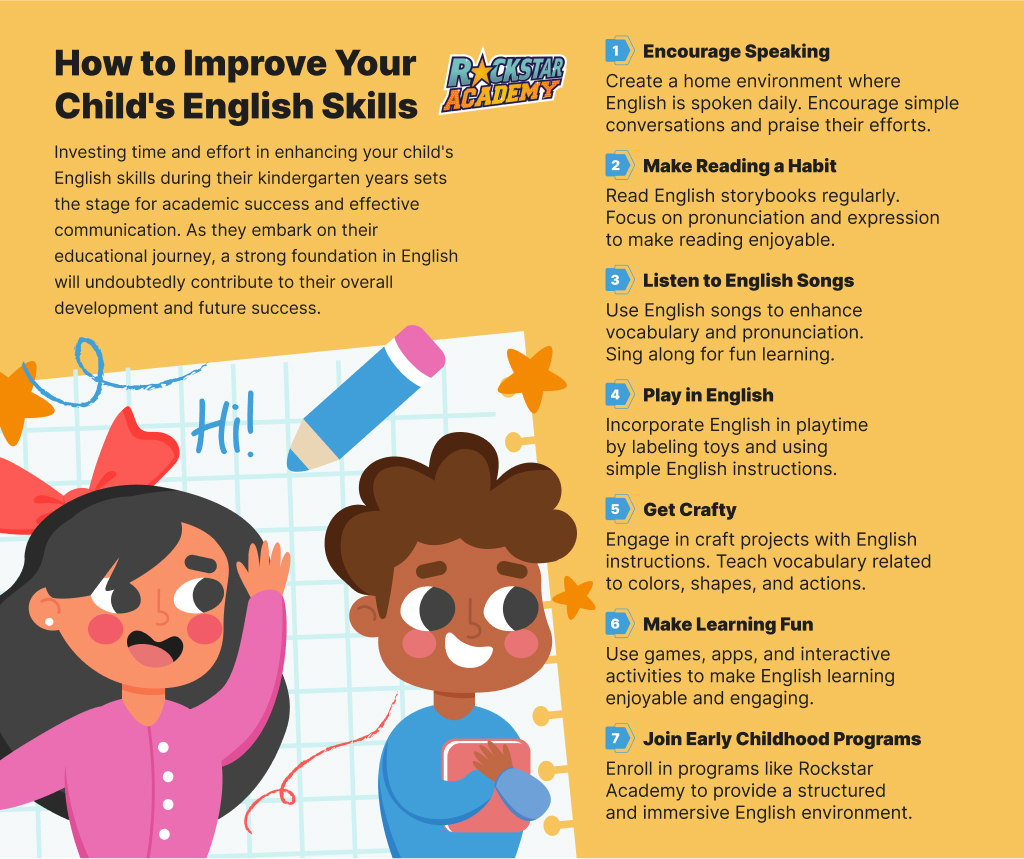
Credit: www.rockstaracademy.com
Step 10: Handle Setbacks With Patience
Every child has “stuck” moments. Some days, reading will go smoothly. Others, your child may resist or forget.
- Stay calm; never force reading
- Take breaks when frustrated
- Notice effort, not just results (“I love how you tried that new word!”)
Warning
Comparing your child to others often causes anxiety. Every child reads at their own pace.
Step 11: Use Technology Wisely
Some apps and online games can support reading, but screen time shouldn’t replace real books and face-to-face time.
- Choose apps with phonics, not just word guessing
- Watch together, so you can guide and discuss
For a list of research-backed apps and websites, see this Reading Rockets guide.
Step 12: Celebrate Milestones And Keep Growing
Reading is a lifelong journey. Celebrate your child’s progress, big or small.
- Give stickers, high fives, or a “reading crown”
- Let your child choose their next book
- Record short videos of your child reading to share with family
Small celebrations build motivation and joy.
Common Mistakes And How To Avoid Them
| Mistake | What Happens | Better Way |
|---|---|---|
| Rushing to advanced books | Child feels lost, loses interest | Stay with easy books until confident |
| Correcting every error | Anxiety, less risk-taking | Let small mistakes pass |
| Forcing reading sessions | Stress, resistance | Keep reading fun and short |
| Ignoring your child’s interests | Boredom | Pick books about favorite topics |
Credit: startreading.com
Quick Reference: Do’s And Don’ts
| Do | Don’t |
|---|---|
| Read daily, even for 5 minutes | Use reading as punishment |
| Celebrate small steps | Compare with other children |
| Talk about stories and words | Skip questions and discussions |
| Let your child choose books | Stick only to one type of book |
Additional Insights Most Parents Miss
- Speech comes before reading. If your child struggles to say words clearly, spend more time on talking and listening games before pushing books.
- Picture books build real skills. “Just looking at pictures” is valuable—children learn storytelling, sequencing, and vocabulary.
Frequently Asked Questions
How Early Can I Start Teaching My Child To Read?
You can start talking, singing, and sharing books from birth. Most children begin formal reading between ages 4–6, but every child is different.
What If My Child Isn’t Interested In Books?
Try graphic novels, joke books, or books about their favorite things (dinosaurs, trucks). Sometimes, a new format sparks excitement.
How Do I Know If My Child Is Struggling?
Warning signs: avoiding reading, guessing words without looking, or getting upset during reading. If you’re worried, talk to your child’s teacher or a reading specialist.
Can I Teach Reading If English Isn’t My First Language?
Yes! Read in any language you know. The skills—listening, talking, and loving stories—work in every language. English books can come later.
How Much Time Should We Spend Reading Each Day?
Aim for 10–20 minutes daily. Short, regular sessions are better than long, occasional ones.
Helping your child read at home is one of the greatest gifts you can give. Stay patient, make it joyful, and remember: even small daily steps lead to big successes. Your child’s reading journey starts with you—one page at a time.