
Spaced Repetition Study Schedule — Ultimate Guide
Did you know? Students who use spaced repetition can recall up to 200% more information than those who cram, according to a 2017 study published in *Memory* journal. If you struggle to remember what you studied last week, you’re not alone. Most people forget over 50% of new material within an hour—a problem called the “forgetting curve.” The good news: the right spaced repetition study schedule can help you beat this curve, save hours, and boost grades.
This guide breaks down how spaced repetition works, why it’s so effective, and how to build a schedule that fits your life—even if you’re busy or have failed with flashcards before. Let’s unlock your long-term memory.
What Is Spaced Repetition?
Spaced repetition is a learning technique where you review information at increasing intervals. Instead of repeating the same material every day, you space out your reviews—first after one day, then three days, then a week, and so on.
Think of it like planting seeds. If you water them every hour, they drown. But if you water them at just the right times, the roots grow strong. Spaced repetition helps your memory “roots” grow deeper by challenging your brain just as you’re about to forget.
For example, imagine you’re learning new vocabulary. If you review the same words every day, your brain gets bored and stops paying attention. But if you wait a few days, your brain has to work a bit harder to remember.
This “struggle” is good. It signals your brain that the information is important, making it stick better.
How It Works: The Science
Your brain strengthens memories each time you recall them, but only if the challenge is just right—not too easy, not too hard. Spaced repetition schedules use this principle.
- Forgetting curve: We forget new info quickly. Spacing reviews helps interrupt this decline.
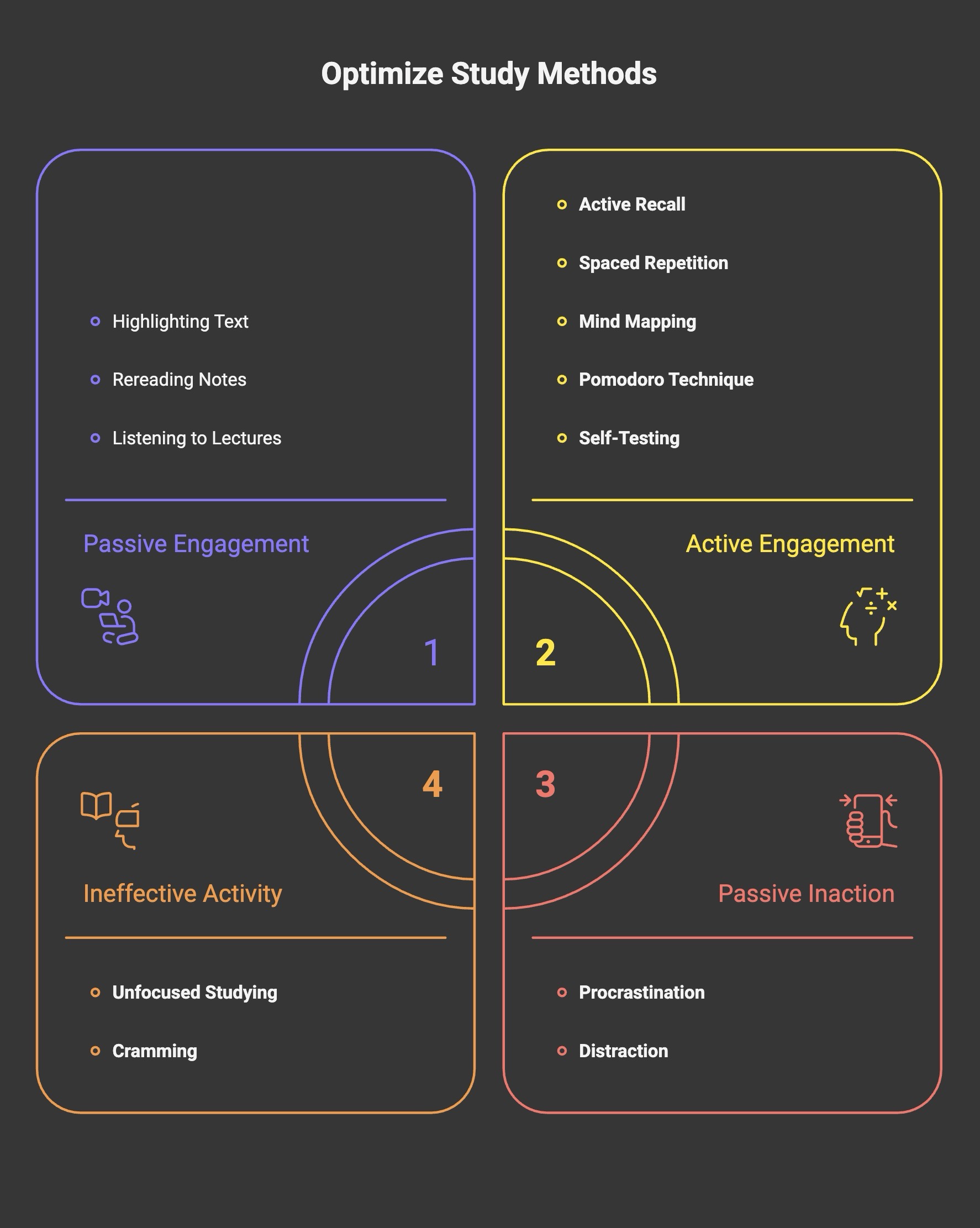
- Active recall: Testing yourself is better than just re-reading notes.
- Intervals: Each review happens right before you’d normally forget.
When you space your reviews, you’re giving your brain a workout at the perfect moment. This workout builds “memory muscles. ” The more you practice this, the longer you can go before forgetting. Studies also show that active recall—like using flashcards or quizzes—is much more powerful than simply re-reading notes.
For example, if you read a chapter and then close the book to quiz yourself, you’ll remember more than if you just read the chapter twice.
Research shows spaced repetition improves retention for languages, medicine, law, and even musical skills. In fact, top language learners and medical students rely on this method because it’s proven to work across all ages.
Why Spaced Repetition Works
Key Benefits
- Saves time: You study less overall because you focus on what you’re about to forget—not everything.
- Boosts long-term memory: Reviews at the right time make memories stick for months or years.
- Reduces stress: No more last-minute cramming.
- Works for any subject: From vocabulary to history dates, even technical concepts.
The power of spaced repetition lies in how it matches your brain’s natural forgetting rhythm. Instead of fighting against forgetting, you work with it. For example, if you’re learning biology terms, you don’t have to keep all 100 terms fresh in your mind daily.
You only review the ones that are at risk of fading.
Example
A medical student using spaced repetition for anatomy terms remembered 80% of terms after six months. Her friend who crammed remembered only 30%. The difference? The spaced repetition student spent less time overall but reviewed at strategic moments.
Another example: A language learner who studies 10 new words a day and reviews them following a spaced schedule will remember far more words after three months compared to someone who reviews all words every day or crams before a test.
Stat: According to NIH research, spaced repetition outperforms massed practice (cramming) by 30-50% in long-term recall.
How To Build A Spaced Repetition Study Schedule
You don’t need fancy software—just a calendar or notebook. Let’s break it down step by step.
Step 1: Choose Your Material
Pick what you want to remember—flashcards, notes, vocabulary, formulas. For best results, break complex topics into small pieces. For example, instead of “Photosynthesis,” use cards like “Step 1 of Photosynthesis. ”
Another tip: Focus each card or question on one idea. For history, write, “What happened in 1492?” not a list of events. For math, instead of “Algebra rules,” create cards like, “What is the quadratic formula?”
Step 2: Set Your Intervals
Classic schedules use these review intervals:
- Day 0 (learn)
- Day 1
- Day 3
- Day 7
- Day 14
- Day 30
- Day 60
- Day 120
You don’t need to follow this exactly. The key: review just before you forget. If you recall easily, increase the interval. If you struggle, shorten it.
Another option: Use a “1, 3, 7” rule for beginners—review after 1 day, then 3 days, then 7 days. As you get comfortable, you can add longer intervals.
Step 3: Organize Your Tools
You can use:
- Paper flashcards: Simple, portable, customizable.
- Apps: Anki, Quizlet, or SuperMemo automate scheduling.
- Calendar/Planner: Write down review dates.
If you prefer digital tools, apps will remind you when each card is due. But with paper, you can use a box system (like the Leitner System) or just write review dates on each card.
Example
If you learn 20 French words today, review them tomorrow, then three days later, and so on. Mark each review in your planner.
If you’re using Anki, the app will show you which cards are due each day. If you’re using paper, make separate piles or boxes labeled with the next review date.
Step 4: Review Actively
Don’t just read—test yourself. Cover answers, recall from memory, or explain aloud.
For example, try to say the answer before you flip the card. If you can’t remember, check the answer, then say it out loud again. You can also write the answer or draw diagrams from memory for more complex topics.
You can even teach the concept to someone else, or pretend to. Teaching is a powerful form of active recall.
Step 5: Adjust As You Go
If a card is too easy, increase the gap. If you keep forgetting, review sooner.
Some topics may need more frequent reviews, especially if they are detailed or tricky. For example, technical definitions or formulas often need shorter intervals at first.
Another insight: Don’t be afraid to retire cards you know really well. If you can answer instantly for three rounds, you can move that card to a “mastered” pile and focus on harder ones.
Pro tip: Never review all cards daily. Only review what’s “due” according to your schedule. This saves time and keeps your brain challenged.
Popular Spaced Repetition Methods
Let’s compare common methods you can try.
| Method | How It Works | Best For |
|---|---|---|
| Leitner System | Move cards between boxes based on correct recall. Review hard cards more often. | Paper flashcards, beginners |
| Anki Algorithm | App calculates intervals using recall ratings. | Advanced users, digital fans |
| SuperMemo SM-2 | Uses complex math to predict forgetting; adapts reviews. | Language learners, exam prep |
Each method has strengths. The Leitner System is hands-on and visual, perfect for people who learn by doing. Anki and SuperMemo adjust to your performance, helping you save time and focus on weak spots. Trying different methods can help you find what fits your style.
Credit: studyguides.com
Common Myths Vs Facts
There’s a lot of confusion about spaced repetition. Let’s clear it up.
| Myth | Fact |
|---|---|
| It’s only for languages | Works for any subject—math, history, science, even skills |
| You need special software | A notebook and calendar is enough to start |
| It takes too much time | Saves time—review less, remember more |
Some people also think spaced repetition is boring or only for top students. In reality, people of all ages—including busy adults—use it to remember important things, from computer codes to customer names.
Real-world Applications
Spaced repetition isn’t just for students. Here’s how it’s used in the real world:
- Medical schools: Doctors learn thousands of drug names and diseases.
- Language learners: Memorize vocabulary and grammar rules.
- Test prep: SAT, GRE, and other big exams.
- Professional skills: Coding syntax, legal terms, musical notes.
Professionals often use spaced repetition for ongoing certification exams or to stay sharp in fast-changing fields. For example, a lawyer might review legal updates monthly, while a musician could use it to keep rarely-played songs fresh.
Example
A nurse uses Anki flashcards for medications, reviewing each card at set intervals. She recalls drug side effects months later—without cramming.
Another example: A computer programmer makes flashcards for new programming languages. By reviewing concepts every few days, he remembers commands and syntax even months later, making him more effective at work.

Credit: www.threads.com
Do’s And Don’ts For Spaced Repetition
Get the most from your study schedule by following these best practices.
| Do | Don’t |
|---|---|
| Space out your reviews as suggested | Review everything daily |
| Use active recall—test yourself | Just re-read notes passively |
| Adapt intervals to your memory | Stick to one schedule forever |
| Start with small sets of cards | Add hundreds of cards at once |
One more tip: Don’t get discouraged if you forget sometimes. Forgetting is part of learning. The schedule helps you catch up before you lose the information.
Common Mistakes And How To Avoid Them
Many beginners give up early. Here’s what to watch for:
- Cramming before exams: Trust the schedule—don’t cram.
- Too many cards: Start with 20–30 cards, not 100+.
- Skipping reviews: Missing reviews makes you forget. Try to stick to your schedule.
- Ignoring hard cards: Focus on mistakes, not just easy wins.
Some learners also make the mistake of making cards too broad or unclear. Each card should ask one simple question. And if a card confuses you, rewrite it.
Another mistake: Not adjusting intervals. If something is too easy, stretch the time before the next review. If it’s hard, bring it back sooner. Personalizing your schedule makes it work better for you.
Warning: Skipping scheduled reviews resets your memory. Even one missed review can set you back days.
Sample Spaced Repetition Schedule For One Week
Here’s a quick example for studying vocabulary:
| Day | Activity | Time Needed |
|---|---|---|
| Monday | Learn 20 new words | 30 min |
| Tuesday | Review Monday’s words | 15 min |
| Thursday | Review Monday’s words again | 10 min |
| Sunday | Final review of Monday’s words | 10 min |
As you add more sets, just follow the same pattern. This way, the workload stays small each day, and you don’t feel overwhelmed.
Key Takeaways
- spaced Repetition Boosts Memory, Saves Time, And Reduces Stress.
- active Recall Plus The Right Intervals Is The Winning Formula.
- start Simple: Paper, Apps, Or Planners All Work.
- adjust Your Schedule To Fit Your Memory, Not Someone Else’s.
Even if you’ve failed with other study methods, spaced repetition gives you a fresh start. It’s flexible, science-backed, and works for almost any topic.

Credit: eztestprep.com
Frequently Asked Questions
How Long Does Spaced Repetition Take To Show Results?
Most people notice improved recall after one to two weeks. For long-term retention, stick with it for at least a month.
What’s The Best App For Spaced Repetition?
Anki is the most popular and free. Quizlet and SuperMemo are also good options. Paper flashcards work too.
Can I Use Spaced Repetition For Math Or Science?
Yes. Break concepts into small questions. For example: “What is Newton’s Second Law?” or “Solve for x in 2x+3=7.”
You can also make cards for problem steps, formulas, or experiment procedures. This helps you recall not just facts but also processes.
What If I Miss A Review Day?
Review as soon as possible. Don’t skip. If you miss, go back to the last interval and continue.
If you miss too many reviews, shorten your intervals for a while to catch up.
Is Spaced Repetition Better Than Mind Maps Or Summaries?
Spaced repetition is best for facts and details. Mind maps and summaries are great for understanding big ideas. Combine both for best results.
Ready to remember more, stress less, and study smarter? Build your spaced repetition study schedule today. Start small, stay consistent, and enjoy results that last a lifetime.
For more on the science of learning, see this Wikipedia article.